

SUSTAINABILITY Initiatives for Global Environmental Conservation
For a More Sustainable Society:
Development and Sale of Products Using Certified Raw Materials
The Lawson Group carries out its daily business activities by harnessing the blessings provided by the abundant natural environment. However, in recent years, the global environment has been facing major problems such as the depletion of natural resources and a crisis in biodiversity, which has an increasing chance of impacting the business activities of the Lawson Group.
In order to pass on the blessings of our abundant planet to future generations, the Lawson Group is promoting the development and sale of products using certified raw materials that take biodiversity and other factors into consideration as well as the use of such materials in accordance with the Lawson Group Procurement Policy.
List of certifications
Rainforest Alliance Certification
The Rainforest Alliance Certification is obtained by farms that meet the requirements of the Rainforest Alliance Sustainable Agriculture Standard, including efforts to improve the human rights of producers and workers and to implement farming methods that respect natural resources and the environment. Our MACHI café, Lawson’s in-store freshly brewed coffee service, and Ecuadorian “Tanabe Farm Bananas” use crops grown on Rainforest Alliance Certified farms.
- Rainforest Alliance
-
The Rainforest Alliance is an international nonprofit organization that
leverages the power of society and
markets to protect the natural environment and
improve the livelihoods of producers and
people living in forest regions,
helping to create a more sustainable world.
Founded in 1987, the Rainforest Alliance is an international nonprofit organization that works toward a world where people and nature thrive in harmony.
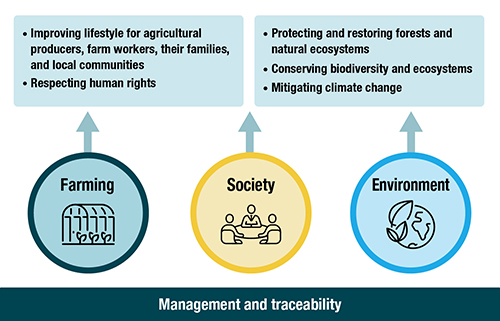
Rainforest Alliance Certification signifies that producers are following more sustainable farming methods that protect ecosystems of flora and fauna, improve livelihoods, promote human rights for farm workers, and help mitigate and adapt to the climate crisis.
- Examples of sustainable practices pursued
by Rainforest Alliance Certified farms (excerpt) -
- Farming
-
- Improving farm resilience through climate change adaptation and other measures
- Maintaining and enhancing soil, water sources, and other natural ecosystems
- Optimizing crop productivity, input efficiency, and profitability
- Reducing environmental and health risks posed by pesticides
- Society
-
- Assessing, preventing, and addressing child labor, forced labor, discrimination, and harassment
- Respecting various human rights of agricultural producers, farm workers, and communities
- Ensuring healthy and safe living and working conditions for farm workers and their families
- Improving livelihoods for farmer, farm workers, and their families
- Environment
-
- Effectively protecting and restoring forests and other natural ecosystems
- Maintaining and enhancing natural vegetation on farms
- Strengthening the protection of wildlife and biodiversity
- Reducing pollution from wastewater and waste
- Reducing GHG (greenhouse gas) emissions from farming operations
- Overview of Farm Requirements under the Sustainable Agriculture Standard
-
1. Management 2. Traceability 3. Shared responsibility and income 4. Farming 5. Society 6. Environment Source: Created based on excerpts from the Rainforest Alliance Sustainable Agriculture Standard, Farm Requirements (v1.3)
- Examples of sustainable practices pursued by Rainforest Alliance Certified farms
-
MACHI café
MACHI café, Lawson’s in-store freshly brewed coffee service, created with the idea that “your communities (Machi) can become a café, anywhere.” To contribute to the happiness of communities (Machi) around the world, we have continued to use coffee beans sourced from Rainforest Alliance Certified farms for more than ten years since the brand’s launch.
“MACHI café” coffee beans are sourced exclusively from Rainforest Alliance Certified farms.*
* Mocha Blend is not of the scope.

MACHI café, Lawson’s in-store freshly brewed coffee service
Tanabe Farm Bananas
“Tanabe Farm Bananas,” grown in Ecuador, South America, are sold in stores nationwide.
Tanabe Farm has obtained Rainforest Alliance Certification and cultivates bananas through a nature-friendly cyclical farming method that emphasizes soil and water.
Typically, herbicides are used in banana cultivation, but at Tanabe Farm, no herbicides are applied, allowing undergrowth to thrive beneath the banana trees and forming a forest.
The farm also avoids chemical fertilizers and instead creates homemade compost from non-standard bananas, returning it to the soil as organic fertilizer to enrich the soil.
Furthermore, by using bamboo supports for the banana plants, the farm reduces plastic use and promotes environmentally conscious cultivation.
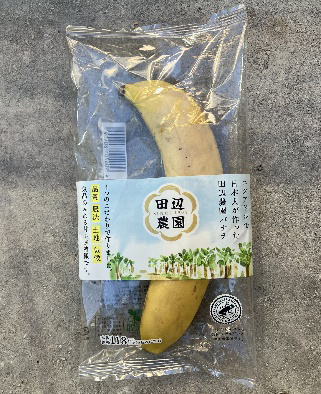
The item shown is sold individually.
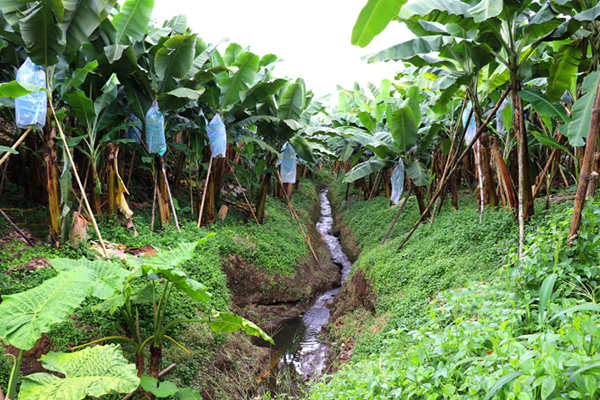
Farms with abundant undergrowth
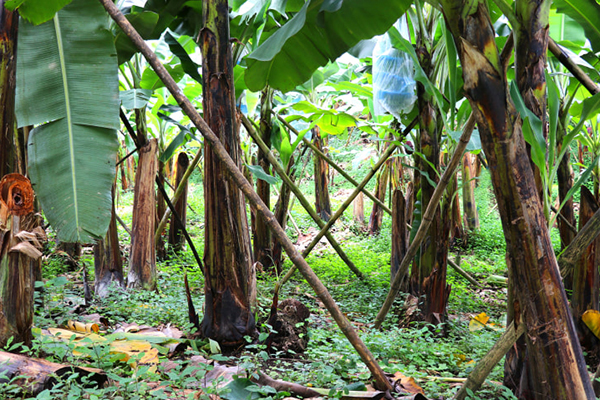
Use of bamboo supports for the banana plants to reduce plastic
●Initiatives at Tanabe Farm
- No chemical fertilizers or herbicides
- Creation of homemade organic fertilizer from non-standard bananas for nutrient-rich soil
- Plastic reduction efforts through bamboo supports
- Bananas grown using clean water from on-site wells
FSC® Certification
FSC® certification is a scheme to provide products that come from responsibly managed forests that provide environmental, social, and economic benefits to consumers in a visible form and return economic profit to the producers.
For our original paper cups and paper rolls used at cash registers, we use FSC®-certified products, which are made from timber from properly managed forests and other raw materials from controlled sources.
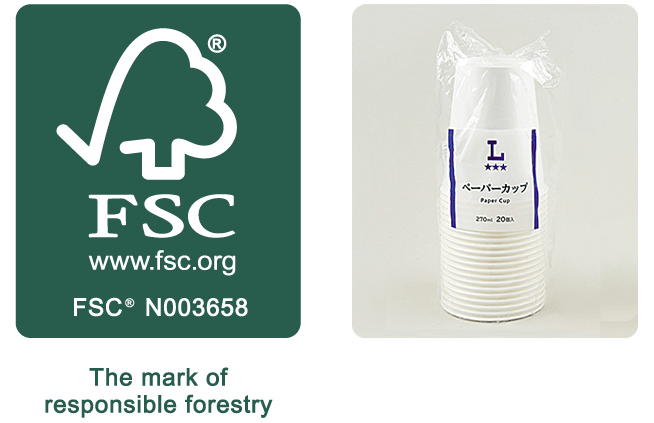
- FSC® certification
-
FSC® certification is a mechanism that enables consumers to choose products made from
responsibly sourced and properly managed wood, thereby helping to protect forests.
The FSC (Forest Stewardship Council®) was established in 1994 to address the ongoing destruction of forests, which threatens wildlife habitats and the livelihoods of local communities that depend on forests. The FSC® certification system allows for the identification and purchase of wood sourced from properly managed forests. By choosing products bearing the FSC® label, consumers can support the preservation of forest biodiversity and the rights of local communities, indigenous peoples, and workers, while purchasing responsibly produced goods.
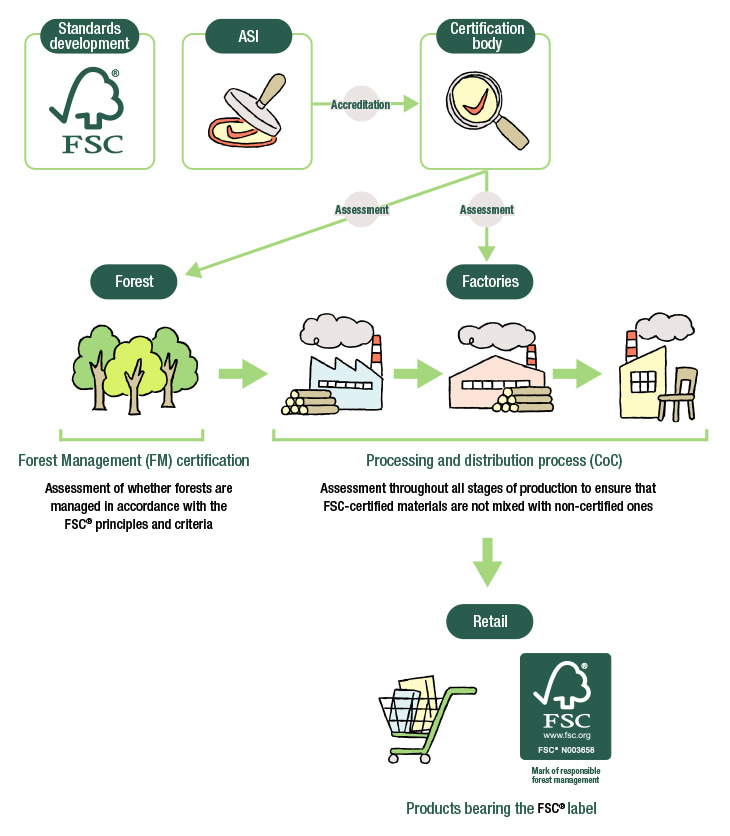
Every organization involved in the production, processing, and distribution process—from forest to final product—must be certified in order for a product to bear the FSC® label. The assessment and issuance of FSC® certification are carried out not by FSC® itself, but by independent third-party certification bodies accredited by ASI, which verify whether the wood originates from properly managed forests.
- Mechanism of FSC® forest certification
-
Source: FSC® Japan website
PEFC Certification
PEFC certification is the world’s largest forest certification system that validates and ensures that forests are maintained to be sustainable. For our beverage cartons, we use PEFC-certified products, which are made from timber from properly managed forests, recycled resources, and other raw materials from controlled sources.
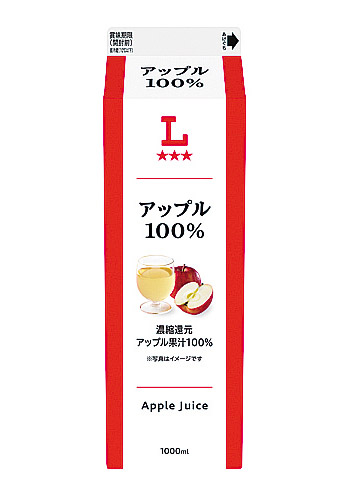
Apple 100%
- PEFC certification
-
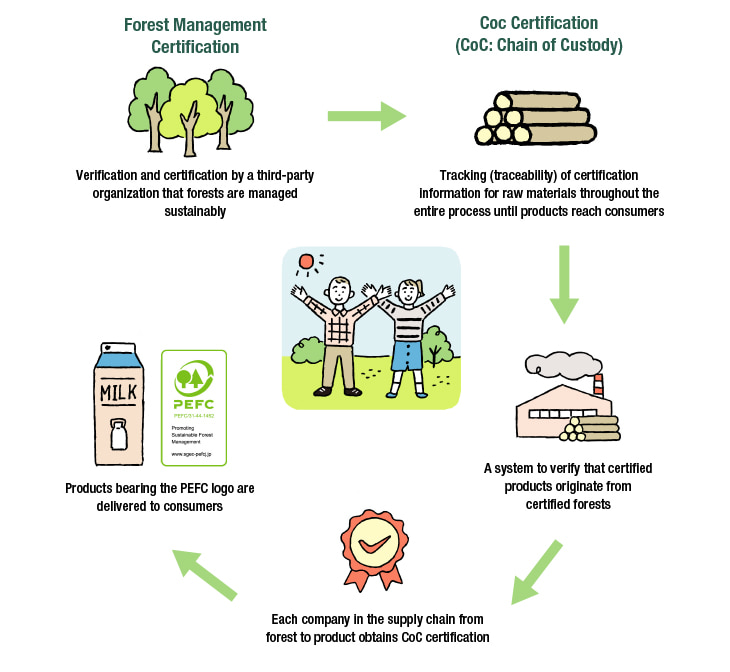
The PEFC certification is a certification system that verifies and
guarantees forests are managed sustainably.
By tracking certification information on raw materials (such as origin) throughout all production stages until the product reaches consumers, the system verifies that the wood has been harvested from sustainably managed forests. The Programme for the Endorsement of Forest Certification Schemes (PEFC), a federation of independently established and operated forest certification schemes in various countries, aims to promote sustainable forest management through the implementation of rigorous third-party certification. Forest certification schemes in each country that joins PEFC must all be systems that comply with the international certification standards—namely, the sustainability criteria established by PEFC (the Forest Management Certification Standards and the CoC Certification Standards).
Consumers can contribute to the protection of sustainable forests—and, by extension, the global environment—by purchasing products bearing the PEFC label.
- Mechanism of PEFC certification
-
Source: International Forest Certification System, SGEC/PEFC Japan website
GAP Certification
Good Agricultural Practices (GAP) refers to production process management initiatives aimed at ensuring the sustainability of the safety of food, environmental preservation, and occupational safety in agriculture. We make efforts to obtain GAP (JGAP, ASIAGAP) certifications in order to establish appropriate farm management systems at LAWSON Farm companies.
* The registration number under the ASIAGAP-certified farm logo is the number for LAWSON Farm Chiba
Growing delicious and healthy vegetables using sustainable farming methods
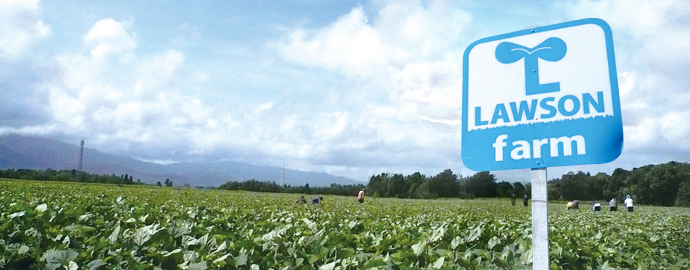
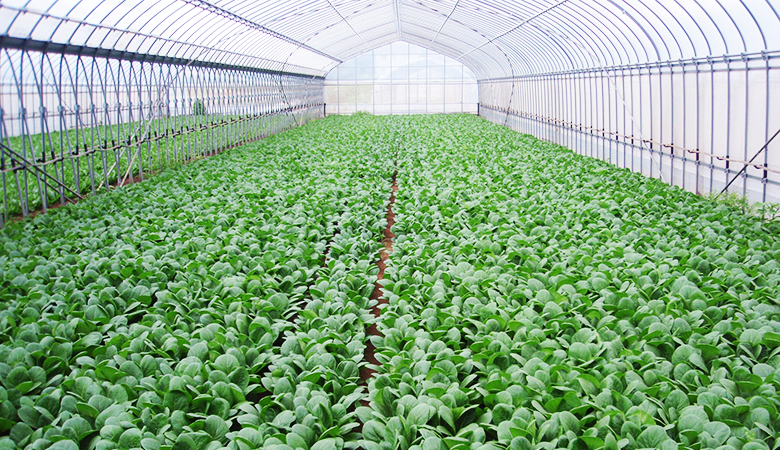
■LAWSON Farm, a corporation eligible for farmland ownership
In order to ensure a stable supply of farm produce to Lawson Group stores, we have established LAWSON Farm, a corporation eligible for farmland ownership with member farms, at 16 locations nationwide (as of May 2025). In order to produce delicious and healthy vegetables, it is important to cultivate healthy soil and promote environmentally sustainable farming methods. To this end, LAWSON Farm members employ the Nakashima method of farming, which involves conducting soil diagnoses to develop ideal soil for growing crops before planting and supplies appropriate nutrition according to the growing conditions of the crops. We are also working to obtain GAP (JGAP, ASIAGAP) certification, a program that sets out guidelines for sustainable agricultural production. This will enable us to ensure sustainability in terms of quality improvement, food safety, and environmental conservation, including biodiversity.

- Message from the President
- Corporate Conduct Charter, Code of Ethics, and Policies
- Identification of Lawson’s Material Issues
- Environmental Vision Lawson Blue Challenge 2050 !
- Participation in Initiatives
- Sustainability Promotion System
- TCFD Proposal Initiatives
- TNFD Proposal Initiatives
- Environmental Preservation and Corporate Citizenship Activities
- Carbon-free Initiatives
- Initiatives for Global Environmental Conservation
- Supply Chain
- The Lawson Group's "Happiness in Communities" Fundraising
- Respect for Human Rights
- Customer Relations
- Owners
- Relationship with Suppliers
- Supplier Hotline
- Employee Relations
- Community Relations
- Supporting Safety and Security in the Community
- Corporate Governance
- ESG Data
- Special Feature
- Sustainability Report


