

SUSTAINABILITY Initiatives for Global Environmental Conservation
Reducing Plastic Shopping Bag
Reducing Unnecessary Plastic Shopping Bag Use
Plastic is a convenient material for our daily lives, but it also causes environmental problems due to
plastic waste. Lawson is working to reduce the use of plastic bags, bottles, and containers to address
this problem.
With regard to plastic shopping bags, we are promoting various initiatives, such as
charging for plastic shopping bags, promoting the use of reusable shopping bags, and using plant-derived
materials, with the aim of achieving our 2030 target of completely phasing out plastic shopping bags.

Effective July 1, 2020, it is mandatory for stores to charge for plastic shopping bags as part of preserving the global environment. Lawson strives to reduce plastic use by charging for plastic shopping bags and using plastic containing plant-derived materials by 30% in response to this movement.
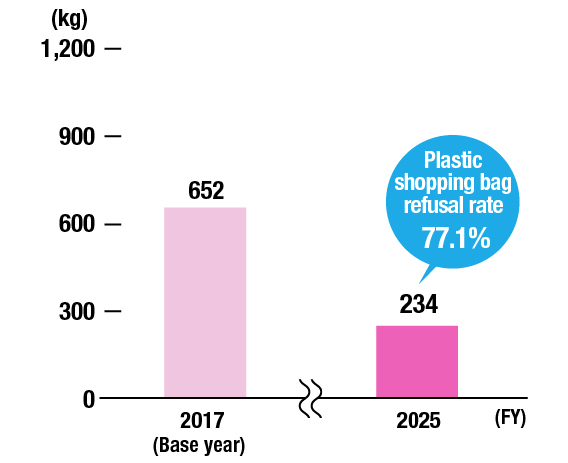
Also, we have promoted the use of portable and reusable shopping bags since 2007. As a result of these efforts, the shopping bag refusal rate at the end of February 2026 reached 77.1%.
●Weight of plastic shopping
bags consumed per store
(Excluding the data on LAWSON STORE 100)

▲ A plastic shopping bag reduction
campaign
poster posted in the stores
(Japan Franchise Association
poster for member
convenience stores)
Natural Lawson introduces shopping bags made using 100% eco-friendly materials by allocation of biomass materials and recycling based on the mass-balance method*1
In January 2006, Natural Lawson introduced at three early-adopter stores shopping bags*2 made using 100% eco-friendly materials by allocation of biomass materials and recycling, based on the mass-balance method. (The bags were introduced at all stores at the end of June 2026.)
The new shopping bags are made of roughly 50% allocated polyethylene from biomass-derived materials (using biomass raw materials sourced from waste edible oil, waste oil, and other materials) and roughly 50% allocated polyethylene from recycling (using waste plastic raw materials recycled through chemical recycling). *3 As such, they can be said to be made using 100% eco-friendly materials. Their biomass materials restrain use of new fossil resources and reduce CO2 emissions, while their recycled materials promote recycling of plastic wastes based on chemical recycling, a method that leads to higher recycling rates, and reduce CO2 emissions by avoiding incineration.*4
●Schematic diagram
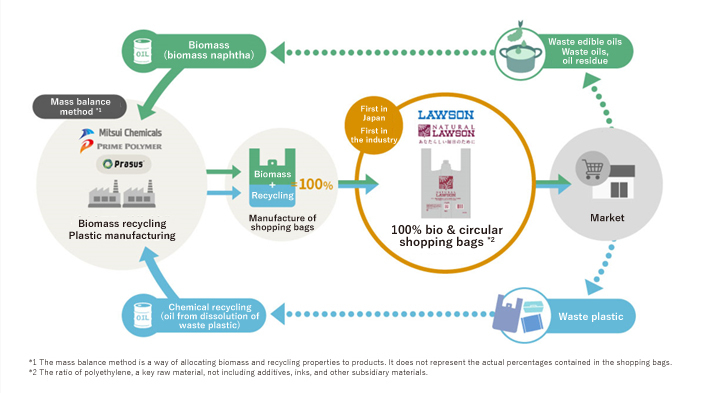
- The mass balance method is a method of applying the properties of raw materials with specific properties (such as biomass materials) to part of a product in accordance with the volume of such materials used, when such materials are mixed with other raw materials (such as petroleum-based raw materials) in the processes of production of a product from raw materials and distribution (source: “Roadmap for Bioplastics Introduction,” Ministry of the Environment of Japan). While these shopping bags are not made of 100% eco-friendly materials, they can be said to use 100% such materials by allocation.
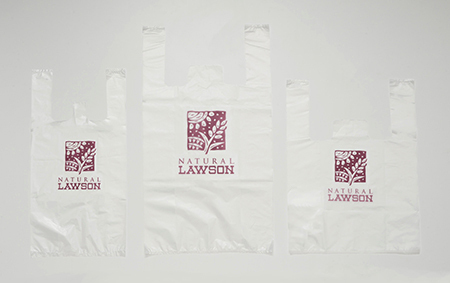
- Three types of shopping bags were introduced: the small size costs six yen; the large size costs 10 yen; and the bento size costs six yen (all prices include tax).
- This ratio is the ratio of polyethylene, a key raw material, not including additives, inks, and other subsidiary materials.
- Information shown is current as of the end of June 2026.

- Message from the President
- Corporate Conduct Charter, Code of Ethics, and Policies
- Identification of Lawson’s Material Issues
- Environmental Vision Lawson Blue Challenge 2050!
- Participation in Initiatives
- Sustainability Promotion System
- TCFD Proposal Initiatives
- TNFD Proposal Initiatives
- Environmental Preservation and Corporate Citizenship Activities
- Carbon-free Initiatives
- Initiatives for Global Environmental Conservation
- The Lawson Group's “Happiness in Communities” Fundraising
- Respect for Human Rights
- Customer Relations
- Owners
- Relationship with Suppliers
- Employee Relations
- Community Relations
- Corporate Governance
- ESG Data
- Special Feature
- Sustainability Report


